

Victorian Bath Tub: Clawfoot Baths and Roll Top Classics
A Victorian bath tub is the piece most people picture when they imagine a bathroom with character: a deep tub standing freely on four sculpted feet, one end raised for the back, the rim gently curved. At Casa Padrino we treat the Victorian bath tub as a piece of furniture rather than a sanitary fitting, and our collection reflects that. It ranges from Italian ceramic slipper baths on gold or silver claw feet to acrylic clawfoot baths in white with black or silver feet and handmade copper baths in tones from bronze to antique mint green. The complete range is in our bathtubs category.
In Britain the form needs little introduction. Victorian and Edwardian houses were the first homes in which the bathroom became a room of its own, and the freestanding cast iron tub on feet was the object around which that room was planned. Today the same silhouette appears in London terraces, Georgian townhouses, country rectories and boutique hotels alike, because it brings something a fitted bath cannot: a sense of occasion every time you run the water.
This page looks at the Victorian bath tub as a style: where it comes from, how the different shapes differ, what the feet and finishes say about the room, and which practical questions are worth settling before you choose. If you are mainly concerned with space, floor loads and plumbing, our guide to the freestanding bathtub goes into planning in more depth.
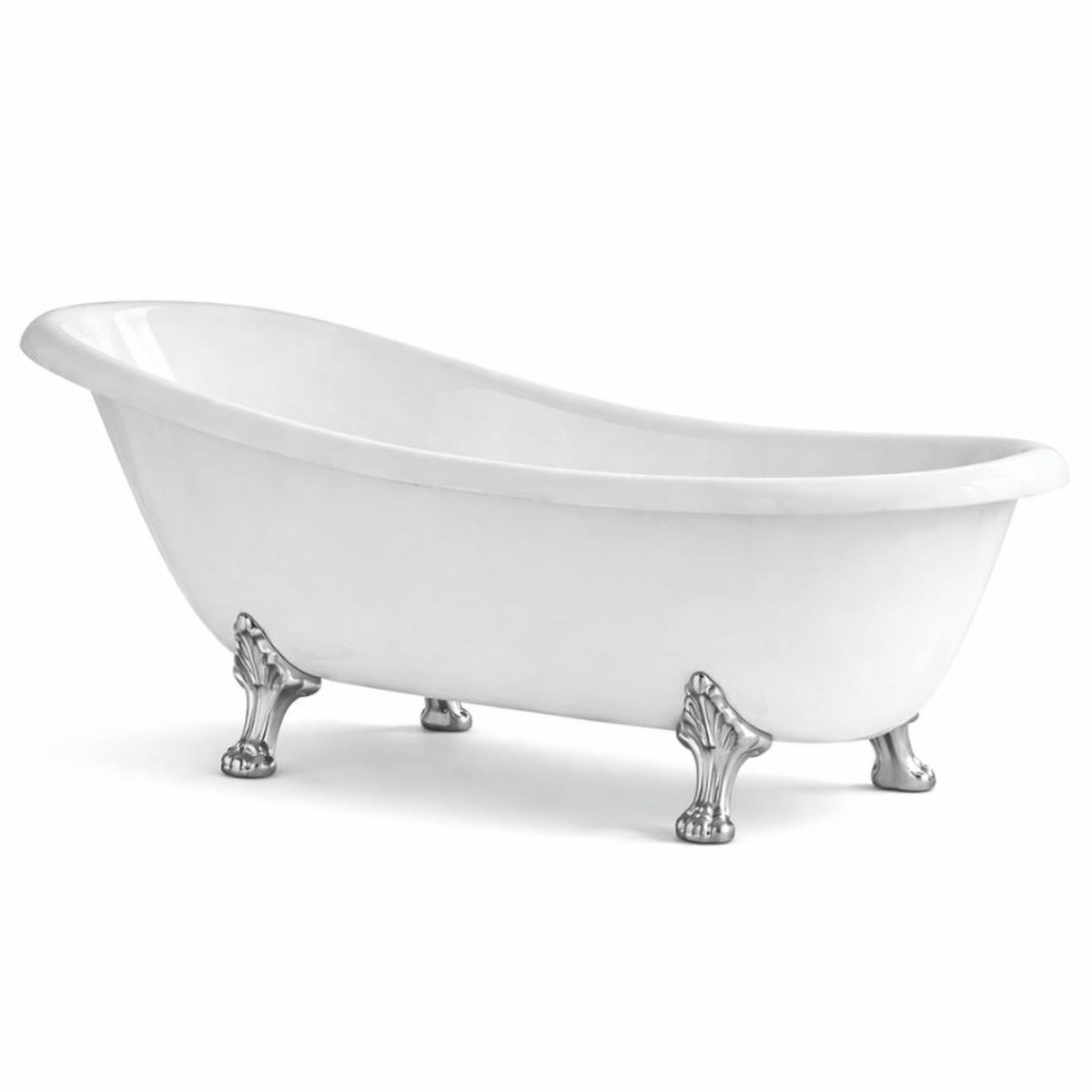
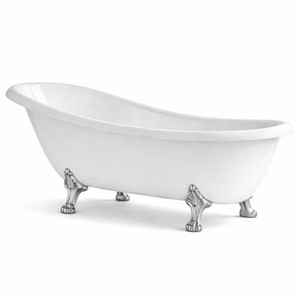
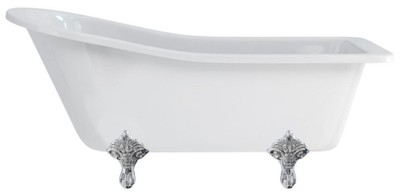
A slipper bath made in Italy: white ceramic, a raised back and four silver claw feet, 170 x 80 cm. Pictured: Casa Padrino Luxury Art Nouveau Bathtub White / Silver 170 cm
Where the Victorian bath tub comes from
Until well into the nineteenth century, bathing in most households meant a portable tin bath in front of the fire, filled and emptied by hand. That changed as piped water and gas boilers reached middle class homes. Once hot water could be brought upstairs, a fixed bath became possible, and the industry of the day answered with cast iron: strong, mouldable and able to take a coat of vitreous enamel on the inside.
Raising the tub on feet was a practical decision before it became a decorative one. A bath on legs could be installed without boxing it in, air could circulate beneath it, and the floor underneath could be cleaned. Foundries soon realised that the feet were also the obvious place for ornament, and the claw and ball foot, borrowed from Georgian furniture, became the signature of the period. The result is the clawfoot bathtub that is still recognised all over the world.
Original Victorian baths were heavy. Contemporary versions keep the silhouette but use ceramic, acrylic and copper, which changes the practical side considerably without losing the look.
Slipper, roll top and double ended: the shapes explained
The names of the shapes are often used loosely, yet the shape decides how you will actually lie in the bath.
The slipper bath has one end raised noticeably higher than the other, rising like the heel of a slipper. You recline against the high end and the taps sit at the low end or beside the tub. Our Italian ceramic models and several of the white acrylic clawfoot baths follow this shape.
The roll top bath takes its name from the thick, rounded rim that rolls outwards over the edge. Many roll top baths stand on feet, others sit on a plinth, and the rim is what gives the tub its soft, generous outline. The double ended bath raises both ends to the same height, so two people can share it or one person can choose either end. In our range, a freestanding double ended bath in glass fibre reinforced acrylic with a copper effect exterior and white interior combines this shape with a warm metallic finish.
Clawfoot feet and finishes
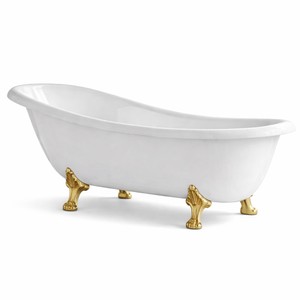
The feet are what make a clawfoot bathtub instantly recognisable, and they deserve as much thought as the tub itself. In our collection you will find claw feet in gold and in silver on the Italian ceramic slipper baths, black or silver feet against white on the acrylic models, and copper feet beneath the copper baths. Each combination sets a different tone.
White with silver reads as calm and classic, a natural choice for a bathroom with white metro tiles and chrome taps. White with black is more graphic and works well with black and white floor tiles or dark painted joinery. Gold feet bring warmth and suit marble, brass and deep wall colours. If gold is the direction you are leaning towards, our page on the gold bathtub looks at that finish in detail.
Whatever you choose, keep the metals in the room consistent. Feet, bath filler, waste, towel rail and mirror frame should share one tone. Two different metals side by side are noticed immediately, and rarely in a good way. Matching floor standing bath taps are presented on our page about freestanding bath taps, and the full range of bathtub taps is in the shop.
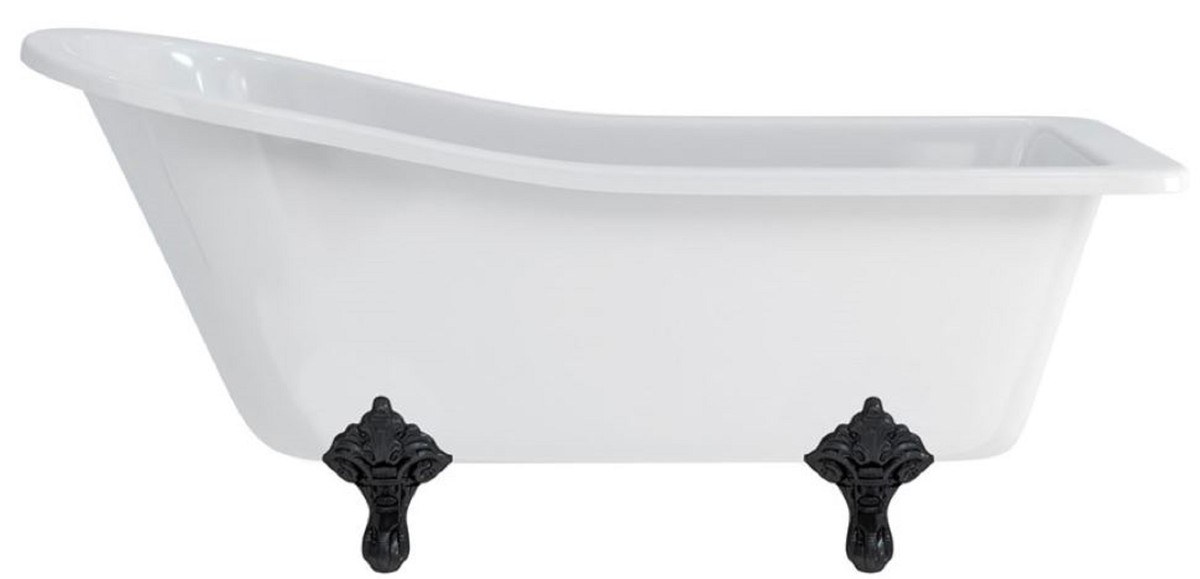
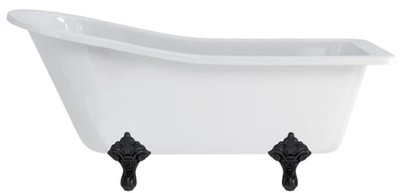
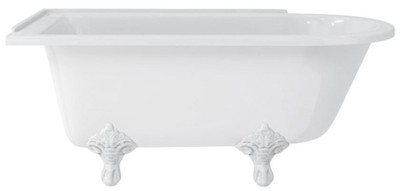
White acrylic and black claw feet: a graphic version of the slipper bath, 169 x 73 cm. Pictured: Casa Padrino luxury Art Nouveau bathtub white / black 169 x 73 x H. 77 cm
Materials in our Victorian collection
Because the material decides weight, warmth and care, it is worth looking at the options one by one. The following versions make up our Victorian and clawfoot range:
- Ceramic, made in Italy: slipper baths of 170 x 80 cm, 72 cm high, white with four metal claw feet in gold or silver, supplied without taps or waste, other colours available on request
- Acrylic with aluminium: clawfoot baths of 150 x 75 cm and 169 x 73 cm in white with white, black or silver feet, weighing between about 41 and 52 kg
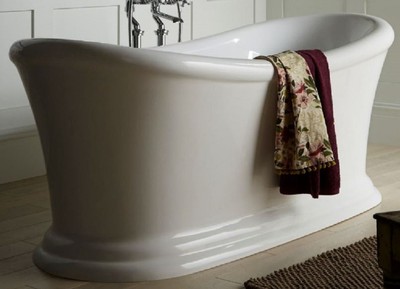
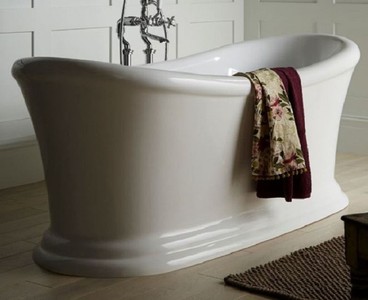
- Curved acrylic: white freestanding baths of 164 x 70.5 cm and 177.5 x 88.5 cm in a soft, rounded Victorian outline
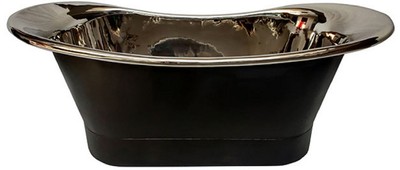
- Copper, worked by hand: baths of about 170 x 72 cm in copper, bronze, silver, black and silver, white and copper or antique mint green, plus a compact 124.5 cm model
- Glass fibre reinforced acrylic with copper effect: a double ended bath of 173.5 x 73 cm, 49 kg, holding 200 litres, with adjustable feet, click waste and overflow in chrome
The acrylic models are the practical choice for upper floors and older houses, because they weigh a fraction of a traditional cast iron tub and can be carried upstairs by two people. Copper is the most individual material: each tub is worked by hand, and small irregularities in the surface are part of its character rather than a flaw. The Italian ceramic baths offer a smooth, easy care surface and a crisp finish that makes the claw feet stand out.
Colour and the Victorian bath tub
The Victorians themselves were not shy of colour, and a tub painted on the outside was common in grander houses. Our copper baths continue that idea with finishes that are part of the material: bronze, antique mint green with copper, silver chrome or black with silver.
A useful rule of thumb: the quieter the room, the more character the bath can carry. In a bathroom with patterned encaustic tiles, a wallpaper and a busy floor, white with silver or black feet keeps things balanced. In a plain room with limewashed walls or simple panelling, a coloured or metallic bath can take centre stage.
Bringing a Victorian bath into a period home
Many Victorian bath tubs end up in houses that are themselves Victorian or Edwardian, and in those houses three questions come up again and again. The first is the floor. Suspended timber floors with joists are common in older British homes, and a full bath with a person in it puts a concentrated load on four small feet. A builder or structural engineer can check this quickly if you give them the empty weight of the chosen model, which is why the lighter acrylic versions are often the natural choice upstairs.
The second question is access. Narrow staircases, tight landings and turns are the real obstacle, more than door widths. Measure the route before ordering, including the turning space on the stairs. The third question is plumbing. A clawfoot bathtub is usually supplied by floor standing taps or by wall mounted taps with a long spout, and both need their connections in place before the floor is finished. Many of our models are designed specifically for wall or floor mounted taps, so plan that early with your plumber.
For heating, a bathroom built around a Victorian bath benefits from a radiator in the same spirit. Column radiators and classic designs are collected on our page about traditional radiators, and the shop category bathroom radiators shows the full selection.
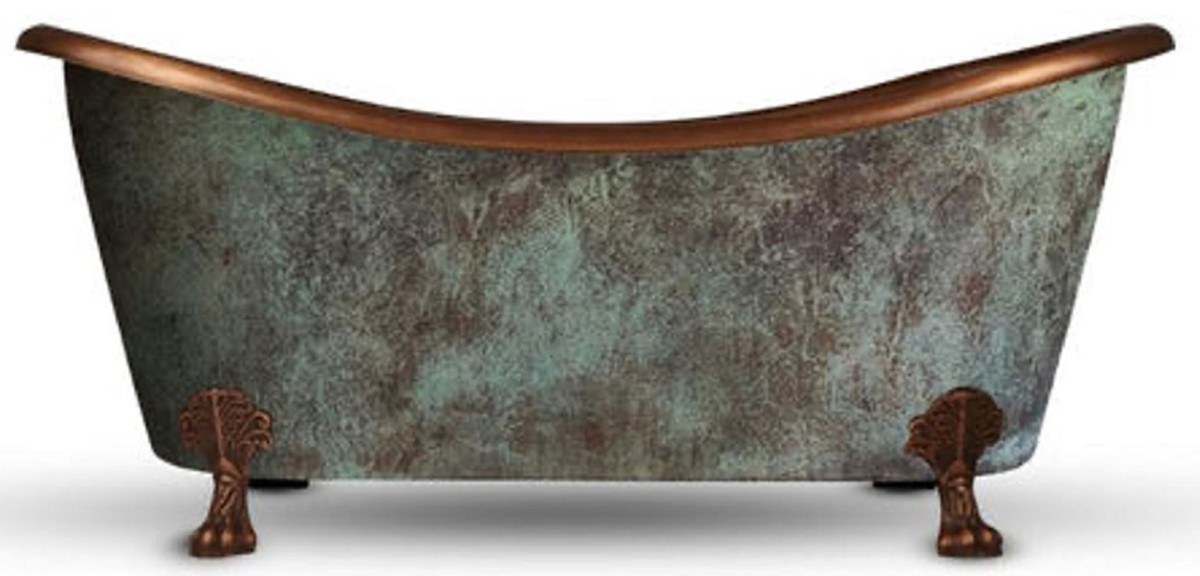
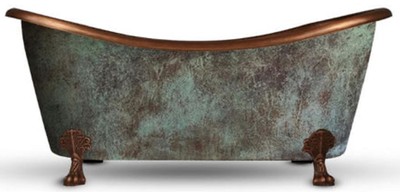
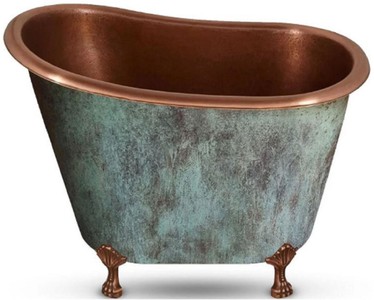
Handmade copper with an antique mint green exterior on copper claw feet, about 170 x 72 cm. Pictured: Casa Padrino luxury Art Nouveau copper bathtub antique mint green / copper 170 x 72 x H. 71 cm
The rest of the Victorian bathroom
A Victorian bath tub looks its best when the room supports it rather than imitates a museum. A high level cistern toilet with a pull chain, a pedestal or console basin, a framed mirror with a visible profile and wall lights at eye level are the elements that give the room its period feeling. Our high level cistern toilet page explains how that classic arrangement works today, and the washbasins and bathroom furniture categories complete the picture.
What rarely works is making every element look old: the room then feels like a film set. For a broader view of how all these pieces come together, our guide to the Victorian bathroom shows the whole room.
Caring for a Victorian bath is straightforward. Warm water, a soft cloth and a mild, non acidic cleaner are enough for acrylic and ceramic. Avoid scouring powders, limescale removers and acidic cleaners. Copper develops its own patina over the years; a soft cloth and gentle cleaning keep the surface as it is meant to be. In hard water areas, a quick wipe after bathing prevents water marks.
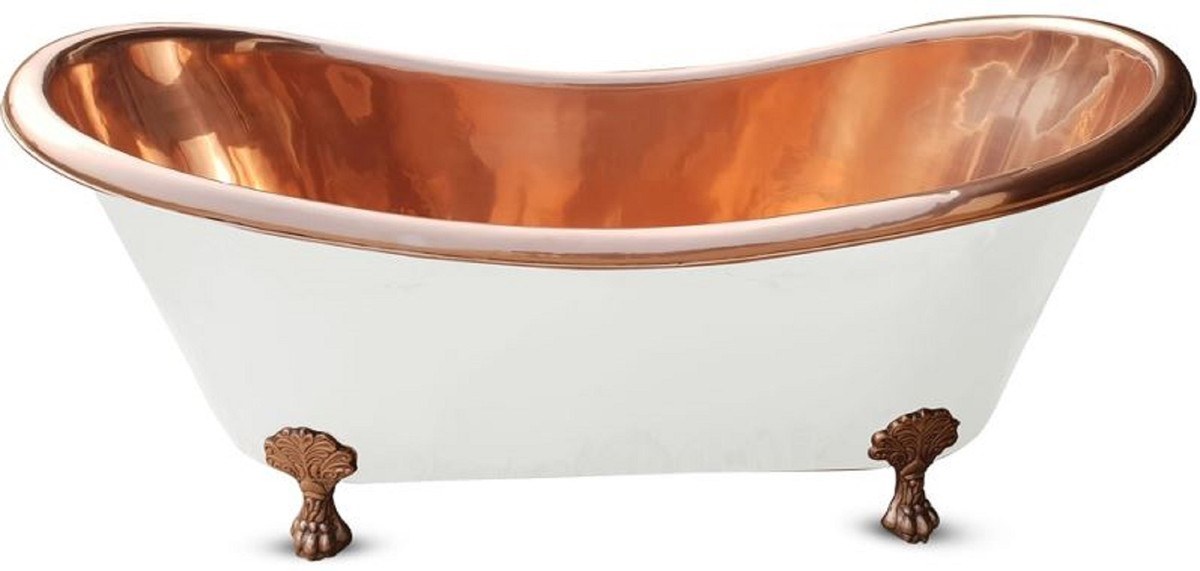
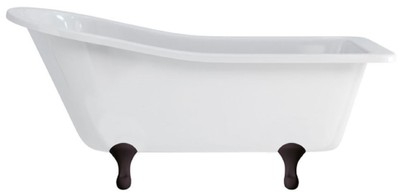
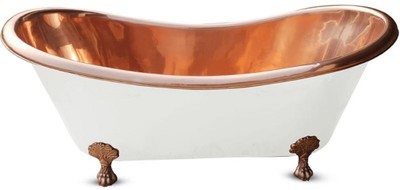
White outside, copper inside, on four copper claw feet: copper in its most elegant form, 170 x 72 cm. Pictured: Casa Padrino luxury Art Nouveau bathtub white / copper 170 x 72 x H. 71 cm
Casa Padrino: Victorian baths for homes and hotels
Casa Padrino is an international supplier of luxury furniture and interiors with a strong focus on historic styles: Baroque, Art Nouveau, Art Deco and country house. Our bathroom collection brings together freestanding baths, washbasins, taps, radiators, toilets and bathroom furniture, so that a complete room can be planned from one source. We deliver across Europe and internationally, to private clients as well as hotels, architects and interior designers.
If you are looking for a Victorian bath tub, you will find more with us than the familiar white clawfoot bath: Italian ceramic slipper baths, acrylic models for upper floors and handmade copper baths in unusual colours. For projects with several bathrooms we coordinate models and finishes directly with your architect or designer. Explore the full collection at www.casa-padrino.de.
Our bathroom series at a glance
- Victorian bathroom
- Traditional radiators
- Designer radiators
- Luxury towel warmer
- High level cistern toilet
- Freestanding bath taps
- Freestanding bathtub
- Gold bathtub
- Luxury washbasin
- Luxury vanity unit
Frequently asked questions about the Victorian bath tub
What exactly is a Victorian bath tub?
It is a freestanding bath in the style of the late nineteenth century, usually with a raised back or two raised ends, a curved rim and four decorative feet, often claw and ball feet. The original versions were cast iron with an enamelled interior. Today the same shape is made in lighter materials such as acrylic, ceramic and copper.
What is the difference between a clawfoot bathtub and a roll top bath?
The terms describe different details. A clawfoot bathtub is defined by its feet, sculpted as claws gripping a ball. A roll top bath is defined by its rim, which rolls outwards in a thick, rounded edge. Many baths are both, but a roll top can also stand on a plinth, and a clawfoot bath can have a slimmer rim.
Is a slipper bath comfortable?
Yes, for one person it is one of the most comfortable shapes, because the high end supports the back and shoulders at an angle. The taps are best placed at the low end or beside the bath so they do not get in the way. If two people want to bathe together, a double ended bath with two equal backrests is the better choice.
Which sizes are available?
Our Victorian and clawfoot baths range from a compact copper model of 124.5 cm to acrylic baths of 177.5 cm. Typical sizes are 150 x 75 cm, 164 x 70.5 cm, 169 x 73 cm and 170 x 72 or 170 x 80 cm. The individual product page gives the exact measurements, including height.
How heavy is a modern clawfoot bath?
It depends on the material. Our acrylic clawfoot baths weigh roughly 41 to 52 kg empty, and the copper effect double ended bath 49 kg. That is a fraction of a traditional cast iron bath, which makes these models suitable for upper floors and older houses with timber joists.
Which taps suit a Victorian bath?
Most clawfoot baths are supplied by floor standing bath taps placed beside the tub or by wall mounted taps with a long spout. Many of our models are designed for exactly these two options. Choose taps in the same metal as the feet, and make sure the connections are positioned before the floor is laid.
Can a Victorian bath work in a modern bathroom?
Very well. In a calm, contemporary room the bath becomes a deliberate contrast and the main feature. White with black feet or a copper bath against plain plaster are particularly effective.
Are other colours available?
Our Italian ceramic slipper baths can be ordered in other colours on request, and our copper baths come in several finishes, including bronze, silver, black and silver and antique mint green.
How do I care for a copper bath?
Clean it with warm water, a soft cloth and a mild cleaner without acids or abrasives. Copper is worked by hand, so small irregularities are part of the surface. Over time it may develop a patina, which many owners appreciate as part of the character of the bath.
Do you deliver to the UK and to hotels?
We deliver internationally to private clients, hotels, resorts and developers. For larger projects we agree models, finishes and schedules directly with architects and interior designers. Please let us know about access conditions such as stairs and doorways before ordering, so that delivery can be planned properly.